

OPPENHEIMER 사기 관련 피해 문의가 증가하는 흐름이 확인됩니다. OPPENHEIMER 사기는 글로벌밸류업프로젝트와 IPO 공모주 청약 구조를 결합해 출금 지연 및 추가 입금 요구로 이어지는 특징이 관찰됩니다.
업체명 : 글로벌밸류업프로젝트 · 정영택 대표 사칭 · OPPENHEIMER
수법 : SNS 광고·밴드·라인·오픈채팅 리딩방 등을 통해 글로벌밸류업프로젝트·IPO 공모주 청약 배정·기관 투자 참여 기회 등을 미끼로 접근하고 정영택 대표·윤수현 매니저 등 증권사 관계자와 전문가를 사칭하며 초기에는 무료 종목 추천과 단타 수익 경험·수익 인증 화면·출금 후기 등을 반복 노출해 신뢰 형성한 뒤 전용 앱 설치와 가짜 거래소 플랫폼 가입·옴니버스 계좌 연동·기관 자금 운용 참여 등을 유도하며 투자 금액을 단계적으로 확대시키고 이후 출금 단계에서는 수수료·세금·보증금·기관 승인 절차·출금 제한 해제 등의 사유로 지급 지연시키며 “출금 직전 단계”, “기관 승인 완료”, “해외 금융 규정상 필수 절차” 등의 설명을 반복하고 추가 입금을 요구하는 방식으로 이어지는 구조



최근 OPPENHEIMER 사기 관련 상담 사례가
증가하는 흐름이 확인되고 있습니다.
특히 글로벌밸류업프로젝트 구조는
IPO 공모주 청약과
기관 투자 참여 방식을 결합해
정상 투자 프로젝트처럼 보이도록
연출되는 특징이 관찰됩니다.
초기에는
무료 종목 추천과
수익 인증 화면,
출금 후기 등을 통해
신뢰를 형성하지만,
이후 출금 단계에서는
기관 승인 절차,
보증금 예치,
출금 제한 해제 비용 등을 이유로
추가 입금을 요구하는 흐름이
반복적으로 보고됩니다.
또한 정영택 대표,
윤수현 매니저 등
증권사 관계자를 사칭하며
전문 조직처럼 운영되는 특징도
확인되고 있습니다.
이번 글에서는
글로벌밸류업프로젝트 관련 사례에서
어떤 방식으로 신뢰가 형성되고,
왜 출금 제한 구조가 반복되는지
실제 진행 흐름 중심으로 정리해보겠습니다.
목차
- 글로벌밸류업프로젝트 초기 접근 방식
- IPO 공모주 청약 구조 분석
- 옴니버스 계좌·기관 투자 유도 흐름
- 출금 지연과 추가 입금 구조
- 실제 판단 기준과 대응 방향
글로벌밸류업프로젝트 초기 접근 방식
OPPENHEIMER 사기 구조에서는
처음부터 고액 투자를
요구하지 않는 경우가 많습니다.
오히려 SNS 광고와
밴드,
라인,
오픈채팅 리딩방 등을 통해
무료 투자 정보 제공 형태로
접근하는 흐름이
반복적으로 관찰됩니다.
“초기에는 무료 종목 추천과 수익 사례를 반복 노출하며 경계심을 낮추는 특징이 확인됩니다.”
SNS 광고 기반 유입 구조
최근 사례에서는
“기관 투자 프로젝트”,
“IPO 공모주 우선 배정”,
“글로벌 자산 운용 참여” 같은
문구를 사용해
참여자를 모집하는 흐름이
반복됩니다.
특히 단기 수익 사례와
기관 투자 후기 화면을 함께 제시해
전문성을 강조하는 경우가 많습니다.
피해자는
일반 리딩방이 아니라
실제 해외 투자 프로젝트처럼
인식하게 되는 경우가 많습니다.
역할 분리 운영 방식
리딩방 내부에서는
정영택 대표,
윤수현 매니저,
전문 애널리스트,
고객센터 담당자 등이
각각 역할을 나눠 운영되는 특징이 있습니다.
대표 역할 인물은
시장 분석과
투자 전략 설명을 담당하고,
매니저 역할 계정은
출석 관리,
계좌 개설 지원,
프로젝트 참여 안내 등을
담당하는 흐름이 반복됩니다.
이처럼 역할이 세분화될수록
피해자는 실제 투자 조직처럼
인식하게 되는 경우가 많습니다.
실제 피해 진행 사례
한 사례에서는
밴드 투자방에 들어간 뒤
무료 종목 정보를
약 일주일 동안 받았다고
설명했습니다.
이후 운영자는
“기관계좌 연동 시
공모주 우선 배정이 가능하다”며
전용 앱 설치를
안내한 것으로 전해졌습니다.
초기에는
일부 소액 수익과
출금이 가능했던 것으로 알려졌으며,
이 과정에서 피해자는
“실제 글로벌 투자 프로젝트라고 믿었다”는
반응을 보이기도 했습니다.
| 단계 | 설명 | 특징 |
|---|---|---|
| 1단계 | 초기 유입 | SNS·밴드·오픈채팅 |
| 2단계 | 신뢰 형성 | 무료 종목 추천 |
| 3단계 | 플랫폼 가입 | 전용 앱 설치 |
| 4단계 | 투자 진행 | 소액 출금 경험 |
유사한 흐름은
다른 IPO 공모주 사칭 사례에서도
반복적으로 관찰되는 특징이 있습니다.
IPO 공모주 청약 구조 분석
OPPENHEIMER 사기 사례에서는
IPO 공모주 청약 자체를
핵심 신뢰 요소로 활용하는 특징이
확인됩니다.
특히 기관 물량 배정과
우선 청약 기회라는 설명은
투자 기대 심리를 자극하는 요소로
작용하기도 합니다.
“기관 물량 배정이라는 표현은 특별한 투자 기회처럼 인식되도록 설계되는 경우가 많습니다.”
공모주 우선 배정 강조 방식
운영자는
기관 전용 청약,
VIP 우선 배정,
특별 물량 확보 등을
강조하는 경우가 많습니다.
특히
“일반 투자자는 참여 불가”,
“기관 승인 인원만 가능” 같은 표현은
희소성을 높이는 요소로
작용하기도 합니다.
피해자는
일반 투자보다
더 특별한 기회라고
인식하게 되는 경우가 많습니다.
수익 인증 반복 노출 구조
리딩방 내부에서는
수익 인증 화면과
출금 성공 후기,
단기 수익 캡처가
지속적으로 공유되는 경우가 많습니다.
“오늘 공모주 수익 실현”,
“기관 물량 배정 성공”,
“VIP 수익률 달성” 같은 메시지는
참여자의 기대 심리를
강하게 자극하기도 합니다.
피해자는
다른 참여자들은
실제로 큰 수익을 얻고 있다고
인식하게 되는 경우가 많습니다.
투자 금액 확대 흐름
처음에는
소액 투자만 진행되지만,
이후 VIP 청약 참여,
기관 물량 추가 배정,
옴니버스 계좌 연동 등을 이유로
금액 규모가 커지는 흐름이
반복됩니다.
운영자는
“지금 참여해야 기관 물량 확보 가능하다”,
“VIP 승인 직전 단계다”라는 식으로
추가 입금을 유도하는 경우가 많습니다.
한 사례에서는
초기 수백만 원 수준에서 시작된 금액이
기관 투자 단계 이후
수천만 원 규모로 확대된 것으로
전해졌습니다.
이후 플랫폼 잔고는
계속 증가하는 것처럼 보였지만,
실제 출금 단계에서 문제가 시작됐다는
설명이 이어졌습니다.
| 단계 | 설명 | 특징 |
|---|---|---|
| 1단계 | 공모주 소개 | 기관 투자 강조 |
| 2단계 | 수익 인증 | 성공 사례 반복 |
| 3단계 | VIP 전환 | 우선 배정 구조 |
| 4단계 | 금액 확대 | 추가 입금 유도 |
관련 구조는
다른 IPO 공모주 사칭 사례에서도
유사하게 관찰되는 특징이 있습니다.
옴니버스 계좌·기관 투자 유도 흐름
OPPENHEIMER 사기 구조에서는
옴니버스 계좌와
기관 투자라는 개념을
핵심 신뢰 장치로 활용하는 경우가 많습니다.
특히 일반 투자자와
기관 투자자를 구분하는 설명은
참여자의 기대 심리를 자극하는 요소로
작용하기도 합니다.
“기관 승인 완료라는 표현은 참여자의 조급함을 유도하는 특징이 있습니다.”
옴니버스 계좌 연동 구조
운영자는
기관 전용 계좌,
옴니버스 계좌,
VIP 투자 계좌 등을
강조하는 경우가 많습니다.
피해자는
일반 투자자보다
유리한 조건으로 투자할 수 있다고
인식하게 되는 흐름이 반복됩니다.
특히
“기관 승인 완료”,
“VIP 인증 진행 중” 같은 표현은
심리적 압박 요소로
작용하기도 합니다.
가짜 플랫폼 연동 방식
일부 사례에서는
전용 앱 설치와
외부 플랫폼 가입 절차가
함께 진행되는 경우가 많습니다.
플랫폼 내부에는
잔고 화면,
거래 내역,
수익률 그래프 등이 표시되며
정상 금융 시스템처럼
보이도록 연출되는 특징이 있습니다.
피해자는
실제 증권사 시스템과 연결된 것처럼
인식하게 되는 경우도 있습니다.
심리 압박 구조 특징
운영자는
“출금 직전 단계”,
“기관 승인 완료 상태”,
“정산 절차 마무리 단계”라는 식으로
긴박감을 조성하기도 합니다.
또한
“지금 비용 처리해야
출금 가능하다”는 설명도
반복적으로 등장합니다.
한 사례에서는
기관 승인 절차를 이유로
보증금 예치를 요구한 사례도
보고됐습니다.
이러한 구조는
전형적인 허위 플랫폼 기반
기관 투자 사칭 흐름과
유사한 특징으로 분석됩니다.
출금 지연과 추가 입금 구조
OPPENHEIMER 사기 피해 사례에서
가장 큰 문제는
출금 단계 이후
반복적으로 등장하는 조건 구조입니다.
초기에는 자유로운 출금을
강조하지만,
고액 출금 시점부터
새로운 명목이 계속 추가되는
패턴이 반복됩니다.
“출금 직전 단계라는 설명이 반복되며 추가 비용 요구가 이어지는 흐름은 유사 사례에서도 확인됩니다.”
수수료·세금 구조
출금 신청 이후에는
출금 수수료,
세금 정산 비용,
기관 승인 비용 등을 이유로
추가 입금을 요구하는 사례가 많습니다.
운영자는
“지금 처리하지 않으면
출금이 지연된다”는 식으로
긴급성을 강조하기도 합니다.
그러나 실제로는
비용 납부 이후에도
또 다른 조건이 등장하는 사례가
반복적으로 보고됩니다.
보증금 예치 구조
일부 사례에서는
보증금 예치,
출금 제한 해제 비용,
기관 인증 비용 등을
먼저 납부해야 한다는 설명이
등장하기도 합니다.
특히
“기관 승인 완료”,
“해외 금융 규정상 필수 절차”,
“마지막 인증 진행 중” 같은 표현은
반복적으로 사용되는 특징이 있습니다.
하지만 실제로는
추가 입금 이후에도
새로운 명목이 계속 등장하는 경우가
많습니다.
실제 피해 흐름 사례
한 피해 사례에서는
플랫폼 내부 잔고가
수천만 원 이상으로 표시됐지만,
출금 신청 이후
기관 승인 비용을 요구받은 것으로
전해졌습니다.
피해자가 비용을 납부하자
이번에는 해외 금융 규정상
세금 정산 절차가 필요하다며
또 다른 입금을 요구했다고 합니다.
이후 보증금 예치 비용까지 등장하며
출금은 계속 지연된 채
추가 입금 요구만 반복됐다는
흐름이 보고됐습니다.
유사한 출금 제한 구조는
다른 허위 플랫폼 기반 사례에서도
반복적으로 관찰됩니다.
실제 판단 기준과 대응 방향
OPPENHEIMER 사기 유형은
초기에는 정상 해외 투자 프로젝트처럼
보일 수 있지만,
진행 흐름 전체를 보면
반복되는 특징이 존재합니다.
특히 출금 조건 변경과
반복적인 추가 입금 요구는
중요한 판단 기준으로
언급되는 경우가 많습니다.
“소액 출금 이후 고액 단계에서 제한이 발생하는 흐름은 반복적으로 확인됩니다.”
정상 투자 구조와 차이점
정상 금융 플랫폼이라면
출금을 위해
별도의 기관 승인 비용이나
보증금 예치를
반복 요구하는 경우는 드뭅니다.
또한 출금 단계마다
새로운 비용 명목이 추가되는 흐름 역시
주의 깊게 볼 필요가 있습니다.
특히 고객센터 설명이
계속 변경된다면
구조 자체를 다시 검토할 필요가 있습니다.
기록 정리 중요성
피해가 의심되는 상황에서는
입금 내역,
플랫폼 화면 캡처,
리딩방 대화 기록 등을
정리해두는 경우가 많습니다.
특히 출금 지연 과정과
추가 비용 요구 흐름은
전체 구조를 판단하는 데
중요한 자료가 될 수 있습니다.
추가 입금 전 확인 필요
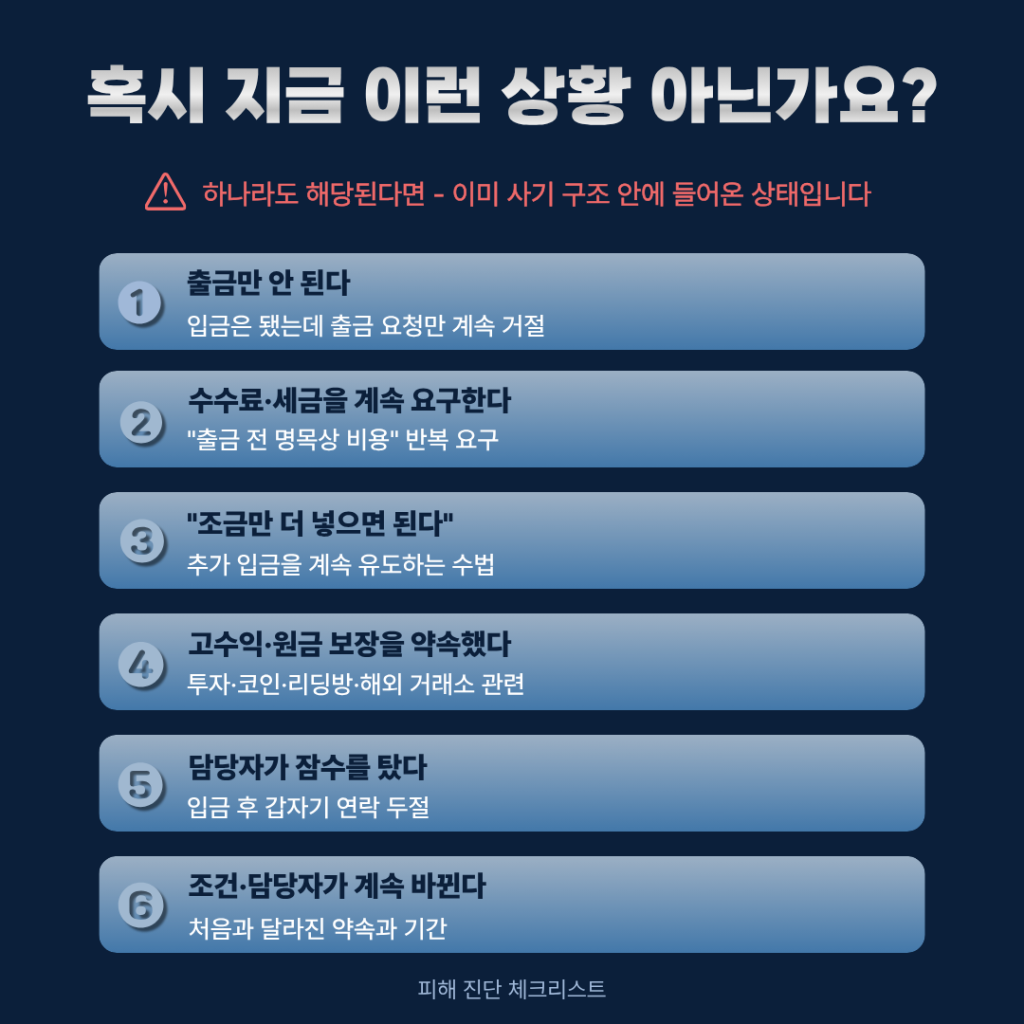
이미 출금 문제가 발생한 상황에서
“출금 직전 단계”,
“기관 승인 완료”,
“해외 금융 규정상 필수 절차” 같은 설명이
반복된다면
신중한 검토가 필요할 수 있습니다.
유사 사례 분석 자료와
다른 IPO 공모주 사칭 흐름을
함께 비교해보면
구조를 이해하는 데 도움이 되는 경우가 있습니다.
또한 외부 참고 자료에서도
기관계좌 기반
허위 플랫폼 구조가
반복적으로 언급되고 있다는
분석이 이어지고 있습니다.
결론
최근 OPPENHEIMER 사기 관련 사례에서는
글로벌 기관 투자 프로젝트와
가짜 플랫폼 구조가 결합되는 흐름이
반복적으로 확인됩니다.
특히 초기 소액 출금 경험은
플랫폼 신뢰를 높이는 요소로
작용하는 경우가 많습니다.
이후 출금 단계에서
기관 승인 비용,
보증금 예치,
출금 제한 해제 비용 등의 이유로
추가 입금 요구가 이어진다면
전체 구조를 다시 확인할 필요가 있습니다.
유사한 IPO 공모주 사칭 사례에서도
같은 흐름이 반복되는 만큼
단계별 판단이 중요할 수 있습니다.
English Version
OPPENHEIMER Scam Warning: 5 Critical Structures You Must Understand | Scam Legal Guide
Meta Description
Reports connected to the OPPENHEIMER scam have been increasing recently. The structure combines fake IPO allocation projects, institutional investment narratives, and manipulated trading platforms designed to trigger repeated deposits.
Suggested URL Slug
/oppenheimer-scam-warning
Recently, more victim reports have emerged involving fake global value-up projects, institutional investment promotions, and operations impersonating financial professionals connected to OPPENHEIMER-related investment structures.
The operation commonly begins through SNS advertisements, Band communities, Line messenger groups, and open investment chat rooms.
At first, the environment appears highly professional and financially sophisticated.
Participants are shown screenshots of successful IPO allocations, institutional investment opportunities, profit histories, and large withdrawal examples.
This environment is carefully designed to build trust before larger financial commitments are requested.
However, repeated reports indicate that serious problems frequently emerge once participants attempt to withdraw larger balances from the platform.
Table of Contents
- Initial Entry Through Investment Communities
- IPO Allocation Structure Analysis
- Omnibus Account and Institutional Investment Manipulation
- Withdrawal Delays and Additional Deposit Demands
- Warning Signs and Important Response Considerations
Initial Entry Through Investment Communities
The reported structure often begins through advertisements promoting global institutional investment opportunities and IPO allocation projects.
“The early stage frequently focuses on exclusivity and professional investment narratives.”
SNS and Open Chat Recruitment
Participants are commonly recruited through SNS advertisements, open investment chats, Band groups, and messenger-based stock discussion communities.
Operators promote phrases such as “global value-up project,” “institutional IPO participation,” and “foreign financial partnership investments.”
Organized Role Division
Inside the investment rooms, different individuals pretend to hold professional roles.
Some present themselves as executives, analysts, assistants, or account managers.
This organizational structure strengthens the illusion of legitimacy.
Early Small Withdrawal Experiences
Some participants report receiving successful small withdrawals during the early stages.
These experiences significantly increase trust in the system and encourage larger future investments.
| Stage | Description | Characteristics |
|---|---|---|
| Stage 1 | Initial Entry | SNS and investment chats |
| Stage 2 | Trust Formation | IPO profit screenshots |
| Stage 3 | Platform Access | Dedicated app installation |
| Stage 4 | Investment Participation | Small withdrawal success |
Comparable operational flows have also appeared in many fake IPO allocation and institutional trading scam structures.
IPO Allocation Structure Analysis
The concept of IPO priority allocation functions as one of the operation’s strongest trust-building mechanisms.
“Institutional IPO allocation narratives are frequently presented as exclusive opportunities.”
Priority Allocation Narratives
Operators repeatedly claim that participants can access institutional-level IPO allocations unavailable to ordinary investors.
Victims may believe they are participating in elite investment programs.
Continuous Profit Screenshots
Inside the chat rooms, screenshots showing profitable trades and successful withdrawals are continuously shared.
Participants frequently see messages claiming that institutional allocations generated large profits within short periods.
Escalation Toward Larger Investments
After trust develops, participants are encouraged to increase their investments to qualify for larger IPO allocations and VIP participation.
Operators claim that only higher-tier investors can access the most profitable opportunities.
One reported case described how a participant who initially invested small amounts eventually deposited significantly larger sums to maintain VIP institutional allocation eligibility.
Omnibus Account and Institutional Investment Manipulation
Institutional-account terminology functions as a major psychological trust mechanism inside the operation.
“Institutional approval narratives are often used to pressure participants into additional payments.”
Omnibus Account Narratives
Victims are instructed to connect omnibus accounts or institutional investment accounts through external trading platforms.
Operators claim these accounts provide access to premium investment opportunities.
Fake Platform Integration
Participants are directed toward dedicated applications and external trading systems displaying balances, transaction histories, and profit graphs designed to resemble legitimate securities platforms.
Victims may believe the platform is connected to real institutional investment systems.
Psychological Urgency
Operators repeatedly claim that the participant is in the “final approval stage” or that “institutional authorization has nearly completed.”
This urgency encourages additional deposits.
One reported case described how a participant was pressured into paying guarantee deposits to finalize institutional approval procedures.
Withdrawal Delays and Additional Deposit Demands
The most serious problems frequently appear during the withdrawal stage.
“Repeated explanations involving final approval procedures are common warning signs.”
Fees and Tax Explanations
Victims are commonly informed that withdrawal processing fees, tax settlements, or institutional approval costs must be paid before withdrawals can proceed.
Operators frequently claim that the process is nearly complete.
Guarantee Deposits and Release Procedures
Additional payments are also requested under explanations involving guarantee deposits, withdrawal-limit releases, or institutional verification procedures.
These conditions commonly appear after larger balances accumulate.
Endless Additional Conditions
A major warning sign repeatedly observed in similar cases is the constant appearance of new conditions after each completed payment.
One reported case described how a participant paid multiple fees involving institutional approval, tax settlement, and guarantee deposits while withdrawals remained blocked.
Eventually, some victims report that communication slows dramatically or stops entirely.
Warning Signs and Important Response Considerations
Several warning indicators repeatedly appear across similar fake IPO and institutional-investment structures.
“Repeated payment requests connected to withdrawals are major warning indicators.”
Unusual Withdrawal Conditions
Legitimate investment platforms generally do not require repeated institutional approval fees or guarantee deposits before customer funds can be withdrawn.
If withdrawals depend on continuously changing conditions, careful reconsideration of the overall structure may be necessary.
Importance of Preserving Evidence
Victims are often advised to preserve screenshots, payment records, platform details, and investment-room conversations.
These materials may help reconstruct the overall operational flow later.
Caution Before Sending Additional Funds
Repeated explanations involving “final approval,” “institutional authorization,” or “mandatory overseas financial procedures” should be approached carefully.
Many fake investment structures rely heavily on psychological pressure during the withdrawal phase.
External discussions involving fake IPO projects and institutional trading scams have also described highly similar operational patterns.
Conclusion
Recent reports connected to OPPENHEIMER describe a structure combining fake institutional investment narratives, manipulated trading platforms, and withdrawal restriction tactics.
Early successful withdrawals often strengthen trust before larger investments are requested later.
Withdrawal problems commonly emerge once larger balances accumulate, especially when institutional approval fees and guarantee deposits are introduced.
Repeated payment demands tied to withdrawal approval are patterns frequently observed in similar cases.
Careful evaluation of the overall transaction structure is important whenever withdrawals depend on repeated additional payments.
#OPPENHEIMER사기
#글로벌밸류업프로젝트사기
#정영택대표사칭
#IPO공모주사기
#주식리딩방사기
#출금불가
#사기피해