

SKTBAST 사기 피해 문의가 증가하고 있습니다. SKTBAST 사기는 SKTINV 증권 사칭과 가짜 주식앱 구조를 결합해 출금 지연과 추가 입금을 유도하는 특징이 확인됩니다. 최근 SKTBAST 사기 관련 리딩방 피해 사례가 반복적으로 보고되고 있어 주의가 필요합니다.
업체명 : SKTBAST · SKTINV 증권 사칭
수법 : SNS 광고와 재계승진회 VIP11·교수 추천 종목 등의 문구로 접근해 오픈채팅 및 리딩방 참여를 유도하고 최성민·강가영 등 전문가 인물을 사칭하며 무료 종목 정보와 수익 인증 화면을 반복 노출해 초기에는 수익이 발생한 것처럼 보여 신뢰 형성한 뒤 SKTINV 증권 명칭을 내세운 가짜 플랫폼 및 앱 설치를 유도하고 기관 전용 계좌·VIP 투자 기회·집중 매매 등을 명목으로 투자 금액을 단계적으로 확대시키며 이후 출금 단계에서는 계좌 인증·수수료·추가 예치금·보안 검수 등의 사유로 지급 지연시키고 조건을 반복적으로 변경하며 추가 입금을 요구하는 방식으로 이어지는 구조


최근 SKTBAST 사기 관련 상담 문의가
증가하는 흐름이 확인됩니다.
특히 SNS 광고와
오픈채팅 리딩방을 결합한 형태로
접근이 이루어지는 특징이 있습니다.
초기에는 무료 종목 추천과
수익 인증 화면을 통해
신뢰를 형성하는 방식이 사용됩니다.
이후 SKTINV 증권을 사칭한
가짜 플랫폼 설치를 유도하며
고액 입금 단계로 연결되는 흐름이
반복적으로 확인됩니다.
이번 글에서는
접근 방식과 구조 흐름,
출금 지연 과정과
판단 기준까지 순서대로 정리합니다.
목차
- 리딩방 유입 구조와 초기 접근 방식
- SKTINV 증권 사칭 구조 분석
- 출금 지연과 추가 입금 유도 패턴
- 실제 피해 흐름과 반복 특징
- 대응 과정에서 확인해야 할 핵심 사항
1. SKTBAST 사기 유입 구조와 초기 접근 방식
SKTBAST 사기는
처음부터 고액 투자를 요구하지 않는
특징이 확인됩니다.
오히려 무료 정보 제공과
전문가 추천 형식을 통해
경계심을 낮추는 흐름으로 시작됩니다.
### SNS 광고와 VIP 추천 문구 활용
초기 유입 경로는
SNS 광고와 문자 링크,
오픈채팅 초대가 많습니다.
특히
“재계승진회 VIP11”
“교수 추천 종목”
“기관 투자 정보 제공” 같은 표현으로
관심을 유도하는 경우가 많습니다.
일반 투자자는
실제 전문가 단체나
투자 모임처럼 오해하기 쉽습니다.
이 단계에서는
직접적인 입금 요구보다
관심 유지와 채팅방 참여가 우선됩니다.
“처음 단계에서는 투자보다 신뢰 확보가 우선적으로 진행되는 경우가 많습니다.”
### 최성민·강가영 사칭 방식 특징
리딩방 안에서는
최성민, 강가영 등
전문가 이미지를 활용한 인물이 등장합니다.
실시간 시장 분석,
종목 추천,
수익 인증 자료를 반복적으로 노출하며
전문성을 강조합니다.
특히 일부 참여자는
“오늘 수익 실현 완료”
“VIP방 진입 후 수익 상승” 같은 반응을
지속적으로 올립니다.
이 과정은
실제 투자 분위기를 연출하기 위한
신뢰 장치 역할을 하는 경우가 많습니다.
### 무료 종목 추천 뒤 투자 전환 흐름
처음에는
무료 종목 정보만 제공됩니다.
며칠 동안은
별도 비용 요구 없이
시장 분석 자료와 매매 타이밍이
지속적으로 공유됩니다.
그러나 일정 시점 이후
“기관 전용 계좌”
“VIP 집중 매매”
“특별 종목 배정” 등을 이유로
플랫폼 설치를 권유하는 흐름이 나타납니다.
이 시점부터
단순 리딩방이 아니라
가짜 투자 구조로 전환되는 경우가 많습니다.
| 단계 | 설명 | 특징 |
|---|---|---|
| 1단계 | SNS 광고 유입 | 무료 종목 추천 |
| 2단계 | 리딩방 참여 | 전문가 신뢰 형성 |
| 3단계 | 앱 설치 유도 | 가짜 플랫폼 연결 |
| 4단계 | 투자 확대 | VIP 투자 강조 |
유사한 구조는
다른 주식 리딩방 사례에서도
반복적으로 확인됩니다.
2. SKTINV 증권 사칭 플랫폼 구조 분석
SKTBAST 사기에서는
가짜 플랫폼 설치 과정이
핵심 단계로 작동하는 특징이 있습니다.
실제 증권사처럼 보이는 UI와
잔고 화면을 통해
신뢰를 강화하는 흐름이 사용됩니다.
### 가짜 앱 설치 유도 방식
리딩방 운영자는
앱스토어 링크가 아닌
별도 다운로드 주소를 전달하는 경우가 많습니다.
일부는 APK 파일 설치를 유도하거나
외부 링크 접속을 요구합니다.
이 과정에서
“보안 앱”
“기관 전용 HTS”
“VIP 회원 전용 거래소” 같은 표현이
사용되는 특징이 있습니다.
정상 금융 플랫폼은
공식 경로를 통해 제공되는 경우가 대부분이므로
외부 설치 방식은 주의가 필요합니다.
### 수익률 조작 화면 특징
플랫폼 안에서는
실시간 수익이 발생하는 것처럼
보이는 화면이 제공됩니다.
초기에는
소액 수익 실현이 가능한 것처럼
연출되는 사례도 확인됩니다.
일부 피해자는
실제로 소액 출금이 이루어진 뒤
추가 입금을 결정했다고 설명합니다.
이 단계가 지나면
고액 투자 전환이 시작됩니다.
“초기 소액 출금은 신뢰 강화를 위한 장치로 활용되는 경우가 있습니다.”
### 기관 계좌와 VIP 투자 명목
일정 금액 이상 투자 시
기관 계좌 참여가 가능하다는 설명이 등장합니다.
또는
“특별 종목 배정”
“상한가 예정 종목”
“공모주 우선 참여” 같은 명목으로
추가 입금을 유도합니다.
피해자는
이미 수익 화면을 확인한 상태이기 때문에
추가 투자 결정 가능성이 높아집니다.
이 시점부터는
투자 규모가 빠르게 커지는 특징이 있습니다.
### 실제 피해 흐름 사례
한 사례에서는
SNS 광고를 통해 리딩방에 참여한 뒤
무료 종목 추천을 받기 시작했습니다.
초기에는
소액 거래 수익이 발생한 것처럼 보였고
실제로 일부 금액이 출금되었다고 설명됩니다.
이후 운영자는
VIP 집중 매매 참여를 권유하며
고액 입금을 요구했습니다.
그러나 출금 단계에서는
보안 검수와 계좌 인증이 필요하다는 이유로
지급이 지연되기 시작했습니다.
이후 추가 예치금 요구가 반복되며
피해 규모가 확대된 흐름이 확인됩니다.
3. 출금 지연과 추가 입금 유도 패턴
SKTBAST 사기 피해에서
가장 큰 문제가 발생하는 구간은
출금 단계입니다.
수익이 발생한 것처럼 보이지만
실제 현금화 과정에서
조건이 반복적으로 변경되는 특징이 있습니다.
### 계좌 인증 요구 구조
출금을 요청하면
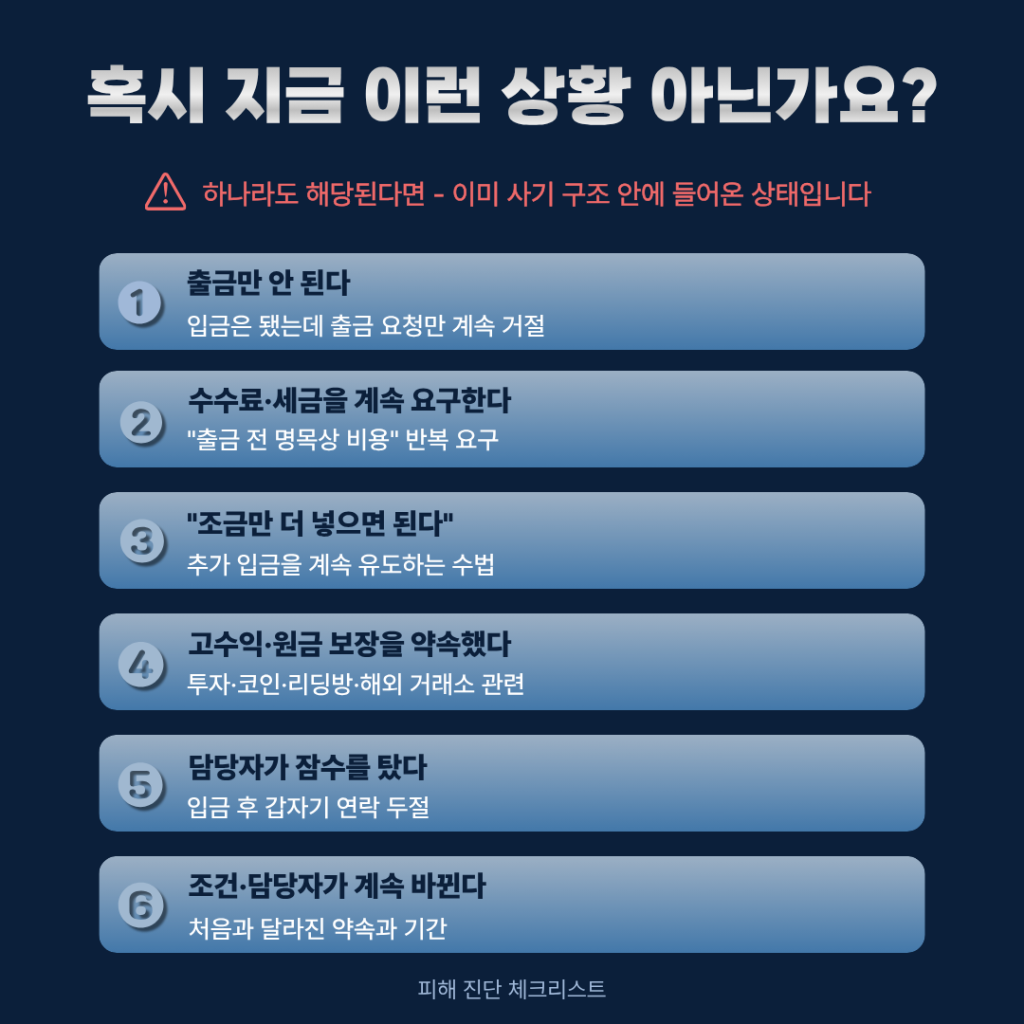
갑자기 계좌 인증 문제가 발생했다고 안내하는 경우가 많습니다.
예를 들어
“보안 검수 필요”
“KYC 인증 미완료”
“기관 계좌 등록 오류” 같은 이유가 사용됩니다.
그리고 이를 해결하기 위해
추가 금액 입금을 요구하는 구조가 이어집니다.
정상 금융사는
출금 자체를 담보로
추가 입금을 반복 요구하지 않는 경우가 일반적입니다.
### 수수료와 예치금 명목 확대
피해가 커지는 시점은
출금 직전 단계입니다.
운영자는
수수료 선납,
추가 예치금,
보안 증거금 등의 명목을 제시합니다.
문제는
조건이 한 번으로 끝나지 않는다는 점입니다.
입금 이후에도
다른 사유가 계속 추가되는 흐름이 반복됩니다.
“출금 단계에서 새로운 조건이 계속 생성되는 구조는 반복적으로 확인됩니다.”
| 단계 | 요구 명목 | 특징 |
|---|---|---|
| 출금 신청 | 계좌 인증 | 추가 입금 요구 |
| 인증 완료 | 수수료 | 선납 요구 |
| 재검수 단계 | 예치금 | 조건 추가 |
| 최종 단계 | 보안 문제 | 반복 지연 |
### 운영진 역할 분리 특징
이 과정에서는
운영진 역할이 나뉘는 경우가 많습니다.
한 명은
전문가 역할을 유지하고,
다른 인물은
정산 담당,
보안 관리자,
출금 담당자처럼 등장합니다.
이렇게 역할을 나누면
피해자는 실제 회사 조직처럼
오해할 가능성이 높아집니다.
특히
“담당 부서가 다르다”는 표현으로
책임을 분산시키는 방식이 자주 사용됩니다.
### 추가 피해로 이어지는 흐름
출금 지연이 길어질수록
피해자는 이미 투자한 금액을 회수하기 위해
추가 입금을 고민하게 됩니다.
운영자는
“마지막 단계”
“이번만 처리하면 완료” 같은 표현으로
추가 자금 투입을 유도합니다.
그러나 실제로는
조건이 계속 반복되는 경우가 많습니다.
유사 사례 분석 자료에서도
동일한 흐름이 반복적으로 언급됩니다.
4. 실제 피해 흐름과 반복 특징
SKTBAST 사기는
단순 투자 실패와는
구조적으로 다른 특징이 확인됩니다.
특히 접근부터 출금 지연까지
일정한 패턴이 반복됩니다.
### 초기 접근 단계 특징
피해자는 대부분
광고 또는 추천 링크를 통해
리딩방에 유입됩니다.
이 단계에서는
실제 투자보다
관심 유지가 핵심입니다.
운영자는
무료 정보와 수익 인증 자료를 통해
심리적 신뢰를 확보합니다.
특히
“VIP 내부 정보”라는 표현이
자주 사용됩니다.
### 신뢰 형성과 금액 확대
신뢰가 형성되면
소액 투자 제안이 시작됩니다.
초기 수익 경험 이후
투자 규모는 점차 커집니다.
일부 피해자는
대출이나 지인 자금까지
추가 투입한 사례도 설명합니다.
이 과정에서는
“이번 종목이 마지막 기회”라는 식의
압박 표현이 사용되기도 합니다.
“고수익보다 중요한 것은 자금 회수 가능 여부입니다.”
### 출금 제한 뒤 반복 요구
문제는 출금 단계에서 발생합니다.
수익은 계속 표시되지만
실제 인출은 지연됩니다.
운영자는
수수료와 인증 문제를 이유로
추가 입금을 요구합니다.
피해자는
이미 큰 금액이 묶여 있기 때문에
회수 기대 심리로 인해
추가 입금을 이어가는 경우가 많습니다.
### 반복되는 피해 구조 정리
결국 구조는
다음 흐름으로 정리됩니다.
접근 → 신뢰 형성 → 금액 확대 → 출금 지연 → 추가 입금 유도
이 패턴은
가짜 거래소 유형과
리딩방 투자 구조에서
반복적으로 나타나는 특징입니다.
관련 구조 분석 콘텐츠를 함께 확인하면
유사 흐름을 비교하는 데 도움이 될 수 있습니다.
5. 대응 과정에서 확인해야 할 핵심 사항
SKTBAST 사기 피해가 의심되는 경우
무엇보다 중요한 것은
자료 정리와 추가 피해 차단입니다.
특히 감정적으로 대응하기보다
기록 확보가 우선될 필요가 있습니다.
### 반드시 확보해야 하는 자료
다음 자료는
초기 정리에 중요하게 활용됩니다.
- 입금 내역
- 대화 기록
- 리딩방 캡처
- 앱 설치 화면
- 출금 요청 내역
- 계좌 정보
- 수익 화면 캡처
시간이 지나면
채팅방 삭제와
계정 차단이 동시에 진행되는 경우도 있기 때문에
빠른 확보가 중요합니다.
### 추가 입금 중단 중요성
출금 지연 이후
운영자는 지속적으로
새로운 조건을 제시합니다.
하지만 반복 입금이 이어질수록
피해 규모가 커질 가능성이 높습니다.
특히
“마지막 인증”
“최종 보안 처리” 같은 표현은
반복적으로 사용되는 특징이 있습니다.
추가 입금 전에는
현재 구조를 객관적으로 확인할 필요가 있습니다.
“출금 문제 해결을 이유로 반복 입금을 요구하는 흐름은 주의가 필요합니다.”
### 혼자 판단하기 어려운 이유
피해자는
이미 수익 화면을 확인했고
운영자와 장기간 대화를 이어온 경우가 많습니다.
그 결과
정상 투자라고 믿고 있는 상태에서
판단이 늦어지는 사례가 발생합니다.
특히 리딩방 내부 분위기와
다른 참여자 반응은
심리적 압박 요소로 작용할 수 있습니다.
외부 자료와 유사 사례를 함께 비교하면
현재 상황을 객관적으로 보는 데 도움이 될 수 있습니다.
### 실제 대응 전 확인할 부분
현재 가장 중요한 것은
추가 자금 이동 여부와
기록 보존 상태입니다.
앱 삭제 전
거래 화면과 계좌 흐름을
정리하는 과정이 필요할 수 있습니다.
또한
동일 플랫폼 피해 사례가
추가로 존재하는지 확인하는 것도 중요합니다.
유사 플랫폼 분석 자료와
관련 사례 정리 글을 참고하면
흐름을 이해하는 데 도움이 될 수 있습니다.
결론
최근 SKTBAST 사기 유형은
리딩방과 가짜 플랫폼을 결합해
신뢰를 형성하는 방식으로
반복되고 있습니다.
특히 초기 수익 경험 이후
출금 단계에서 조건이 변경되는 흐름이
핵심 특징으로 확인됩니다.
수익 화면보다 중요한 것은
실제 출금 가능 여부입니다.
추가 입금 요구가 반복된다면
현재 구조를 객관적으로 확인할 필요가 있습니다.
무엇보다
대화 기록과 입금 내역 등
관련 자료 확보를 우선적으로 진행하는 것이 중요합니다.
English Version
SKTBAST Fraud Warning: Key Patterns Behind Fake Investment Platform Schemes
Recently, investment scam inquiries connected to fake stock advisory groups and imitation trading platforms have continued to increase.
Among the repeatedly reported structures, the SKTBAST-related pattern shows several common characteristics that appear in organized stock recommendation fraud operations.
In many cases, victims are first approached through social media advertisements, open chat invitations, or messages promoting exclusive investment opportunities.
The structure often appears professional at first glance.
Terms such as “VIP investment club,” “professor recommended stocks,” or “institutional trading opportunities” are frequently used to reduce suspicion and encourage participation.
This article examines how these schemes typically operate, how trust is gradually established, and why many victims experience withdrawal restrictions after increasing their investment amounts.
How Victims Are Initially Approached
Most participants do not enter these structures believing they are joining a fraudulent investment operation.
The first interaction usually appears harmless.
Advertisements commonly promote free stock analysis, daily market briefings, or short-term investment opportunities with unusually high success rates.
After entering the chat room, victims are exposed to continuous market commentary, screenshots of profitable trades, and conversations designed to create the appearance of an active investment community.
In many situations, multiple accounts inside the group repeatedly post comments claiming successful profits.
This atmosphere is intentionally designed to create emotional trust before any major financial decision occurs.
“Trust is often built gradually through repeated exposure rather than immediate investment requests.”
Fake Expert Identities and Social Proof
A major feature of this structure involves the use of fabricated or impersonated financial experts.
Names such as investment analysts, senior advisors, or market specialists are introduced as if they are operating inside a legitimate securities organization.
The operators frequently provide detailed explanations about market trends, institutional stock movement, and exclusive investment timing.
For inexperienced investors, the presentation may appear highly convincing.
Some victims report that the operators behaved professionally for several days or even weeks before discussing larger investment opportunities.
This extended interaction period lowers psychological resistance.
Eventually, victims are encouraged to install a separate investment application connected to a fake trading platform.
The Role of the Fake Investment Platform
One of the most dangerous aspects of these cases is the use of imitation trading applications.
Instead of directing victims to official securities services, operators provide external download links or installation files.
These platforms are often presented as institutional trading systems or VIP-only securities applications.
Inside the platform, account balances and profit rates appear legitimate.
Victims may see real-time charts, trade histories, and increasing profits displayed on screen.
In some reported situations, small withdrawal requests are processed successfully during the early stages.
This temporary success becomes a critical trust-building mechanism.
Once confidence is established, operators begin encouraging larger investments.
Terms such as “institutional allocation,” “special stock placement,” or “exclusive trading access” are used to justify additional deposits.
The Withdrawal Restriction Phase
The most serious problems usually begin when victims attempt to withdraw larger amounts.
At this point, operators introduce unexpected conditions.
Common explanations include:
- Security verification requirements
- Institutional account authentication
- Tax prepayment obligations
- Deposit guarantees
- Compliance review procedures
- Additional verification fees
Victims are told that withdrawals cannot proceed unless another payment is completed first.
After one payment is made, another condition often appears.
This repeated escalation is one of the clearest structural indicators of organized financial fraud.
“Withdrawal barriers that continue changing after payment are repeatedly observed in fake investment platform cases.”
Psychological Manipulation During the Scam
These operations rely heavily on emotional pressure and psychological control.
Victims are often encouraged to believe they are close to recovering or unlocking large profits.
Statements such as:
- “This is the final verification stage”
- “Your funds are already approved”
- “One last process remains”
are frequently used to encourage additional deposits.
At the same time, operators divide responsibilities between multiple fake roles.
One person acts as the investment expert.
Another appears as a financial manager.
A third may claim to represent the security department or withdrawal team.
This structure creates the illusion of a real financial organization.
As a result, victims may continue trusting the system even after serious warning signs appear.
A Typical Reported Victim Flow
A commonly reported structure follows this sequence:
First, the victim encounters an online advertisement promoting free stock recommendations.
Second, they join an open chat room where market analysis and profit screenshots are continuously shared.
Third, the victim installs a fake investment application connected to a fabricated trading platform.
Fourth, early profits appear successful, and small withdrawals may even work temporarily.
Fifth, larger investments are encouraged through promises of institutional trading access or VIP opportunities.
Finally, withdrawal requests become blocked through endless verification demands and additional payment requirements.
This pattern is repeatedly observed across multiple stock advisory and fake trading platform cases.
Why These Structures Continue Working
Many victims do not recognize the fraud immediately because the process is gradual.
The operators rarely begin with aggressive demands.
Instead, they focus on emotional engagement and controlled trust-building.
The combination of professional language, active chat room environments, and visible profit screens creates a strong sense of legitimacy.
In some cases, victims become emotionally invested after spending weeks inside the group.
This makes it psychologically difficult to stop participating, even when warning signs become obvious.
The fear of losing previously invested funds can lead victims to continue making additional deposits.
Important Response Considerations
When withdrawal restrictions begin, preserving records becomes extremely important.
The following materials are often considered essential:
- Deposit records
- Chat histories
- Application screenshots
- Withdrawal request logs
- Platform account information
- Contact details used by operators
Victims should also be cautious about deleting applications before preserving transaction evidence.
Another important factor is preventing additional financial transfers.
Many fraudulent structures rely on repeated payments during the “final withdrawal stage.”
However, the conditions frequently continue changing even after additional funds are sent.
External comparison with similar fraud cases may help victims evaluate the situation more objectively.
Final Summary
The SKTBAST-related structure demonstrates many characteristics commonly associated with fake investment platforms and organized stock advisory fraud.
The process usually follows a repeated sequence:
Approach → Trust Formation → Investment Expansion → Withdrawal Restriction → Additional Deposit Requests
The most important warning sign is not the displayed profit amount.
It is whether the funds can actually be withdrawn without new conditions being introduced.
When withdrawal delays are combined with repeated payment demands, careful review of the entire structure becomes essential.
Preserving evidence and objectively analyzing the transaction flow are critical steps in understanding the situation properly.
#SKTBAST사기
#SKTINV증권사칭
#주식리딩방사기
#가짜주식앱사기
#출금불가
#투자사기